


According to Dr. Nguyen Gia Hoang Vy, M.Sc., from the NERCI Nutrition Research and Consulting Institute (Ho Chi Minh City), eggs are essentially a highly nutritious food, rich in high-quality protein, vitamins (A, D, B12, folate), choline, and many essential minerals. Therefore, whether eaten raw or cooked, the nutritional composition of eggs remains completely unchanged.
However, to ensure both food safety and nutritional value, people should consume eggs that have been thoroughly cooked, such as boiled, steamed, or poached. These methods help kill most disease-causing microorganisms, and the protein in eggs is also digested and absorbed more efficiently by the body compared to raw eggs.

Instead of following the trend of eating raw eggs, people should consume cooked eggs such as boiled, steamed, or poached eggs to ensure good health.
PHOTO: N. QUYEN (CREATED BY WHOM)
How to safely combine eggs and honey?
From a nutritional and food safety perspective, Dr. Hoang Vy advises people against making or consuming raw eggs soaked in honey. The reason is that there is currently no "standard recipe" to guarantee safety if the eggs are still raw. Honey does not cook eggs, nor can it definitively kill bacteria like Salmonella. Therefore, soaking eggs in honey is not a substitute for heat treatment.
If you want to combine chicken eggs and honey, two nutritious foods, Dr. Nguyen Duc Thanh, Director of the Emergency, Intensive Care and Toxicology Center at An Sinh General Hospital (Ho Chi Minh City), advises people to completely abandon the method of soaking them raw and replace it with the following preparation method:
- Prioritize cooked food: Eat soft-boiled eggs (with the whites cooked through and the yolks runny), steamed eggs, or fried eggs. This is the best way to kill bacteria and optimize protein absorption.
- If making honey-soaked eggs: Use the steaming method (cooking the mixture with hot steam) or dissolve the mixture in boiling water, instead of just soaking them briefly before eating.
- Appropriate frequency: Healthy individuals should only eat 3-4 eggs per week. Eating too many eggs, especially when combined with honey, which is high in calories, can easily lead to overweight and obesity, and put an increased burden on the liver and kidneys.
"There is no substitute for heat treatment to ensure safety. Therefore, the simple but important advice is to eat eggs that have been properly cooked to maximize their nutritional value and reduce the risk of food poisoning and foodborne illnesses. The safest option is still to avoid following the trend of eating raw eggs," added Dr. Hoang Vy.



The doctor suggests ways to choose, store, and prepare eggs.
To minimize the risk of eggs being contaminated and affecting health, Dr. Duc Thanh advises choosing eggs by:
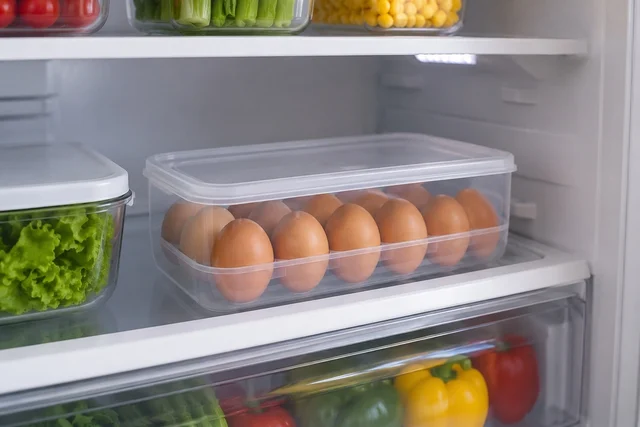
Eggs should not be stored in the refrigerator door because the temperature there fluctuates frequently when the door is opened and closed, causing them to spoil quickly. Instead, store eggs in the cooler compartment of the refrigerator.
PHOTO: N. QUYEN (CREATED BY WHOM)
Prioritize eggs that have been inspected : You should buy eggs from reputable establishments where the eggs have been cleaned, sterilized with ultraviolet light, and have clear labels indicating origin and expiration date.
Observe the eggshell : Choose eggs with a fine, slightly rough, powdery coating on the shell (these are fresh eggs). Avoid eggs with overly smooth, cracked shells or those with black stains or feces adhering to them (these indicate a high risk of bacterial contamination).
Check by gently shaking : Hold the egg and gently shake it near your ear. If there is no sound, the egg is fresh (because the air sac is small, and the egg white and yolk are firm). If you hear a sound or feel a runny sensation, the egg is old.
Principles of storing eggs at home



Do not wash eggs before refrigerating them : Eggshells have a natural protective layer that prevents bacteria from entering. If you wash eggs before storing them, this layer will be lost, allowing bacteria from the outside to go straight into the egg. Only wash eggs right before preparing them for cooking.
Proper storage : Avoid storing eggs in the refrigerator door because the temperature fluctuates frequently when the door is opened and closed, causing them to spoil quickly. Store eggs in a sealed tray/container in the refrigerator's crisper drawer. When arranging eggs, always place the larger end facing up and the smaller end facing down to keep the yolk centered and help them stay fresh longer.
Shelf life : Eggs stored in the refrigerator should be consumed within 3-5 weeks of purchase.