



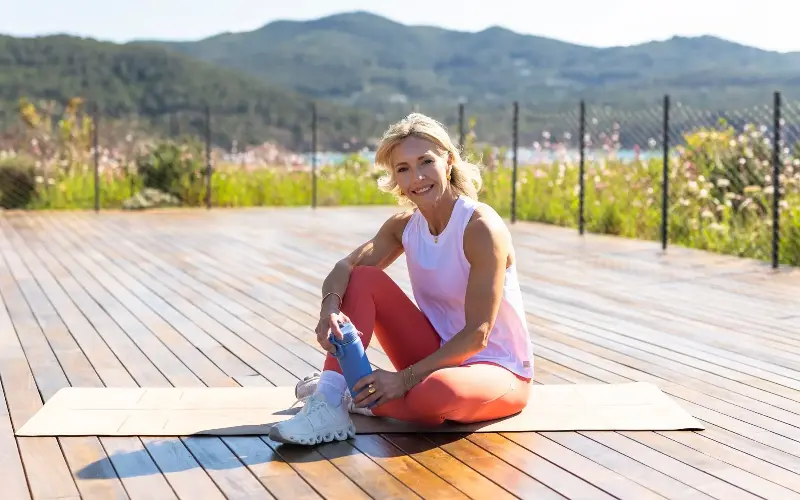
When most people think about exercise, they think about weight loss, fitness or building muscle. But one of the most important reasons I exercise has nothing to do with how I look. It’s to protect my bones.
As a woman in midlife, I no longer exercise purely for today. I exercise for who I hope to be in my 70s and 80s. I want to remain active, independent and capable for as long as possible. Strong bones are fundamental to that.
Yet bone health is rarely discussed until there is a problem. As with high cholesterol or high blood pressure, osteoporosis develops silently. There are no obvious symptoms. We don’t feel our bones weakening. For many people, the first sign is a fracture after a seemingly minor fall. By then, valuable years of prevention have often been lost.
Women need to take bone health seriously
If there is one group that should be paying particular attention to bone health, it is women approaching midlife. Before menopause, the hormone oestrogen plays a crucial role in protecting our bones. Throughout our lives, bone is constantly being broken down and rebuilt, and oestrogen helps maintain the balance between the two.
But during perimenopause and menopause, oestrogen levels begin to fall dramatically. As a result, bone breakdown starts to outpace bone formation. Women can lose significant amounts of bone density during the menopausal transition and the years that follow, often without realising it.
This is why osteoporosis affects women disproportionately. Around one in two women over the age of 50 will experience an osteoporosis-related fracture during their lifetime. HRT will help, but it doesn’t suit everyone. That is why I believe bone-building exercise becomes non-negotiable from perimenopause onwards. We cannot afford to think about it only after a diagnosis.
Bone is living tissue
The encouraging news is that bone is not a static structure. Just like muscle, bone is living tissue that responds to the demands placed upon it. Every time we jump, land, push, pull or absorb impact, we send a message to the specialised bone-building cells our skeletons need to remain strong. This is one of the reasons I am so passionate about exercise for healthy ageing.
We often talk about saving for retirement, putting money aside for the future and making sensible investments. We should think about our bones in the same way.
The earlier we start building strength and exposing our skeletons to appropriate load, the greater the reserves we will carry into later life. But importantly, it is never too late to start. Research increasingly shows that exercise can help preserve bone density and slow age-related bone loss, even after menopause.
Every workout is an investment in the future strength of your skeleton.
Why walking isn’t enough
Whenever I write about bone health, someone asks whether walking counts. The answer is yes – but only up to a point. Walking is one of the best things we can do for our cardiovascular health, our mental wellbeing and our mobility. I encourage everyone to walk regularly.
However, bones respond best to challenges. To maintain or improve bone density, we need to expose our skeletons to forces greater than those encountered during everyday life. That means resistance, impact and muscular loading.
The good news is: this doesn’t require hours in the gym. One of my favourite bone-health workouts takes just five minutes.
‘Can I still do these exercises if I already have osteopenia or osteoporosis?’
Yes, but the approach needs to be individualised.
A diagnosis of low bone density does not mean you should avoid exercise. In fact, strength and weight-bearing exercises are among the most important things you can do to support your bones, maintain muscle and improve balance. The key is starting at the right level and progressing gradually.
If you have osteoporosis, a history of fractures, significant back pain or you are new to impact exercise, it is sensible to check with your physio or doctor before introducing higher-impact movements such as jumps.
My five-minute bone-building workout
I perform each exercise for 45 seconds, followed by 15 seconds of recovery, before moving on to the next movement.
Beginners can complete one round. More experienced exercisers can repeat the circuit two or three times. For some of the exercises, I have included high and low-impact options so you can modify where needed. I try to do this routine three times a week, and you do not need any equipment.
Bodyweight Squats (or Squat Jumps)
How to do it: Stand with your feet shoulder-width apart and lower into a squat, as though sitting into a chair, before standing back up. If your joints tolerate impact, progress to squat jumps.
Why it helps: Squats load the hips, pelvis and spine, which are among the areas most vulnerable to osteoporosis. Adding a jump increases the force travelling through the skeleton, providing an even greater stimulus for bone maintenance.
Skaters
How to do it: Step (low-impact option) or leap sideways from one leg to the other.
Why it helps: Skaters challenge the body laterally, which improves balance, coordination and lower-body strength, while placing healthy stress through the bones of the hips and legs.
Mountain Climbers
How to do it: With your shoulders over the wrists and your body in a straight line, drive your knees towards your chest. Try to avoid raising the hips or dipping the head.
Why it helps: While mountain climbers are not a high-impact exercise, they require you to support your body weight through your wrists, arms and shoulders while engaging the core. This helps strengthen the upper body and provides a weight-bearing stimulus to areas of the skeleton that are often overlooked when discussing bone health. They also elevate the heart rate, making them an efficient addition to a short workout.
Press-ups
How to do it: Start in a high plank position with your hands slightly wider than your shoulders. Keep your body in a straight line from head to heels. Lower your chest slowly towards the floor by bending your elbows, keeping them pointing back rather than out to the side. Press through your hands to return to the starting position and try not to dip your head.
You can do a press up against the wall or on an elevated surface to start, then progress to your knees, before trying on your toes.
Why it helps: Bone health isn’t only about the hips and spine. Press-ups load the wrists, arms and shoulders while building upper-body strength and muscle mass.
Lunges (low-impact) or Lunge Jumps
How to do it: Step one foot backwards and lower both knees until they are bent approximately 90 degrees before returning to standing. Alternate sides.
If you’re looking for more challenge and your joints tolerate impact, progress to alternating lunge jumps (below).
Why it helps: Lunges place significant load through the hips, glutes and thigh bones while challenging balance and stability. The jumping variation increases the forces travelling through the lower body, and provides an even stronger stimulus for maintaining bone density. Because many osteoporosis-related fractures occur around the hip, exercises that strengthen and load this area are particularly valuable.
Investing in your bones
When it comes to bone health, there is no miracle exercise. The real magic lies in consistency. Every squat, every jump, every press-up and every lunge is a small investment in your future skeleton. Over time, those investments add up.
We cannot stop the hormonal changes that come with menopause, nor can we stop ageing. But we can influence how well our bodies withstand it.
Strong bones are about far more than preventing fractures. They are what allow us to keep travelling, carrying shopping, playing with grandchildren, walking up stairs and living life on our own terms for years to come.
For me, that’s one of the most compelling reasons to exercise of all.