



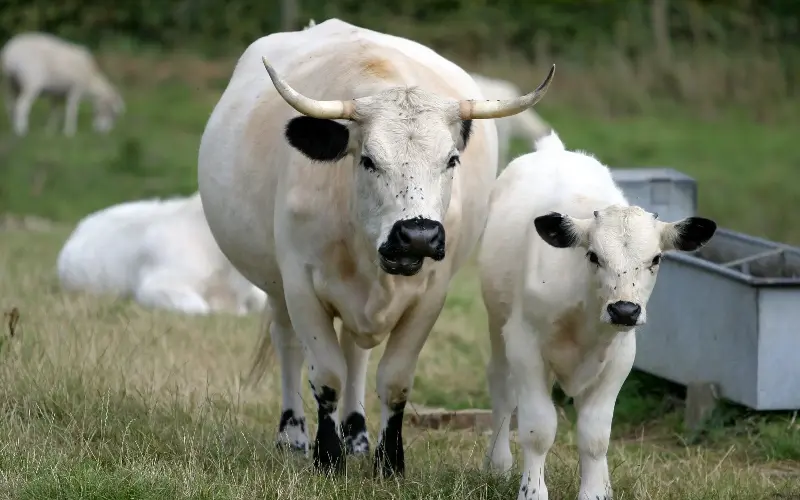
Britain’s oldest cattle breed has become endangered after numbers fell below 1,000 for the first time in decades.
Experts at the Rare Breed Survival Trust have sounded the alarm about the future of white park cattle after the registration of new calves fell by 36pc in the last three years.
This has left just 950 white park cattle across the UK as farmers seek out more economically viable breeds of cow.
In recent years, farmers have increasingly sought out alternatives such as Aberdeen Angus and fast-growing European breeds such as Limousins.
These produce more meat and can be sent to slaughter at around 20 months, 10 months earlier than white park cattle.
The breed has a pale coat, black muzzle and sweeping horns and is typically reared for beef.
Christopher Price, of the Rare Breed Survival Trust, said white park cattle can be overlooked because they “are harder to manage than other breeds”.
“The sharp fall in white park cattle birth registrations is a major concern for the breed’s future,” he said.
He noted that white park cattle are more expensive because farmers must keep them for longer before slaughter, increasing costs.
Mr Price said: “It’s a niche, high-value, premium product. Perhaps with the cost of living crisis, there’s less money around for such luxuries.”
Jan McCourt, a trustee of the Rare Breed Survival Trust, said the “worrying” decline in numbers should serve as a wake-up call, claiming it can be “reversed with a combination of awareness, education and financial support”.
Herds of white park cattle have been in the UK for more than 2,000 years.
They were initially pushed to the brink of extinction in the 1960s when just four herds were left, but repopulation efforts led to numbers stabilising.
Native cattle are prized for their positive effect on ecology.
Their hooves break up grass meadows, allowing wild flowers to grow. They also require less medication than commercial breeds.
Winston Churchill was so keen on white parks that during the Second World War, he sent a herd to Canada to ensure they could breed if the Germans invaded Britain and killed our native stock.
The Rare Breed Survival Trust classed the white park cattle as endangered in its latest update, which also downgraded the status of Lincoln red cattle from “at risk” to “priority” after a sharp population decline.
Boreray sheep, which originated on the now-uninhabited island of St Kilda in the Outer Hebrides, have also been added.
A spokesman from the Department for Environment, Food and Rural Affairs said: “Native and rare breeds of livestock provide genetic diversity and are an important part of our rural heritage.
“We will continue to support at-risk native breeds through a range of actions as part of our sustainable farming schemes, including providing funding for their grazing habitats.”